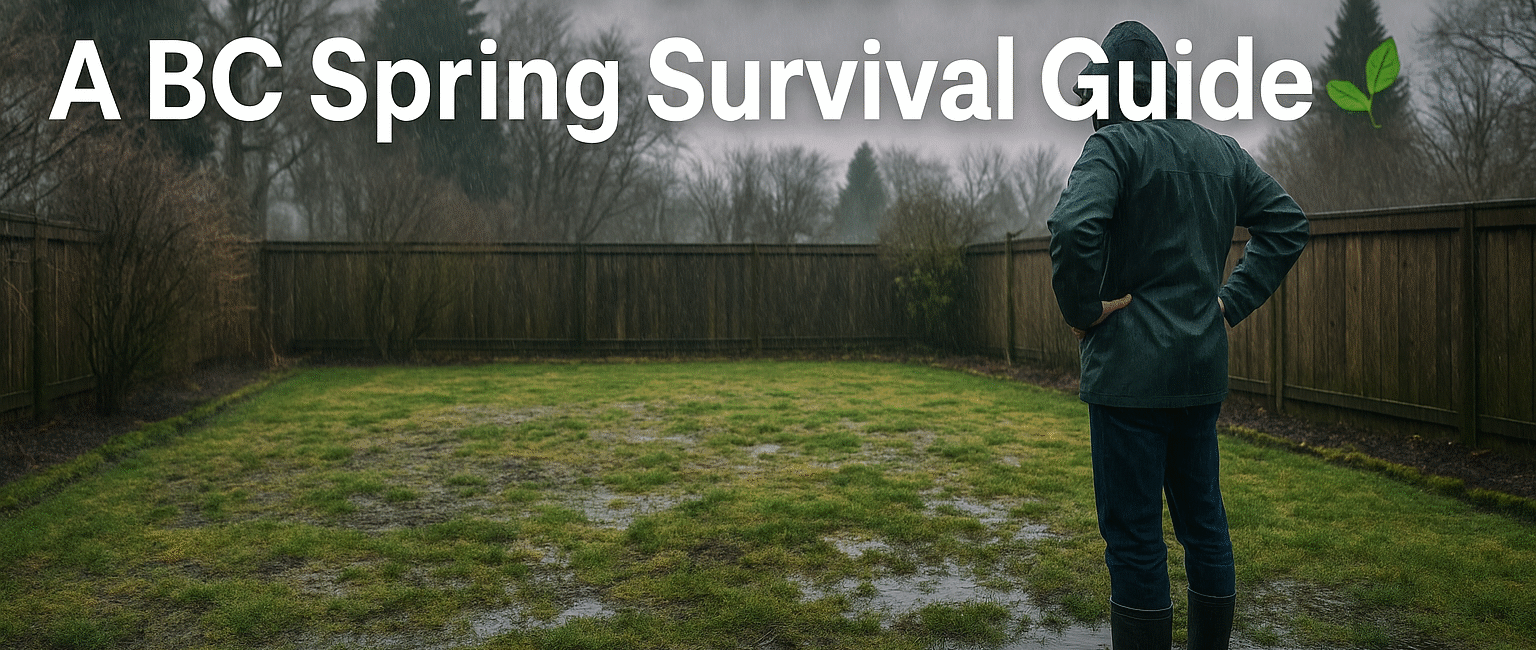
How to Revive a Dead Lawn After BC’s Wet Winter: Your Complete Recovery Guide 🌱
Elong
July 3, 2025

If you’re staring at your yard this spring wondering what happened to your once-beautiful lawn, you’re not alone. BC’s notoriously wet winters can wreak havoc on grass, leaving homeowners across Vancouver, Surrey, Richmond, and beyond dealing with patchy, yellowing, or completely dead sections.
The good news? Most “dead” lawns aren’t actually dead – they’re just dormant, waterlogged, or suffering from common winter damage that’s totally fixable with the right approach.
Before diving into solutions, let’s understand what’s happening to your grass during our soggy Pacific Northwest winters:
Waterlogged Soil: BC’s heavy rainfall and poor drainage create anaerobic conditions that suffocate grass roots. When soil stays saturated for months, roots literally can’t breathe.
Moss Invasion: Our damp climate is paradise for moss, which crowds out grass and creates thick, spongy patches that prevent new growth.
Fungal Diseases: Wet conditions promote lawn diseases like snow mold, brown patch, and red thread – common culprits behind those unsightly dead spots.
Soil Compaction: Constant moisture plus foot traffic during winter months compacts soil, making it nearly impossible for grass to establish healthy root systems.
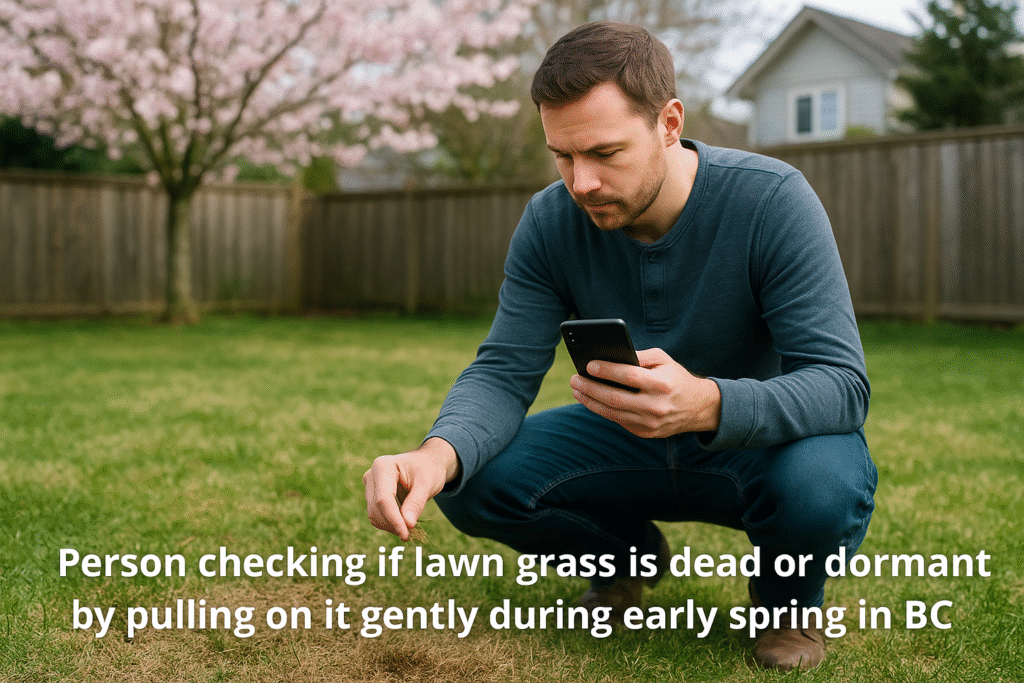
Walk your property and identify problem areas. Is the grass truly dead (brown, brittle, pulls up easily) or just dormant (yellowish but still rooted)? Take photos to track your progress.
Pro Tip: Gently tug on suspicious patches. Dead grass comes up effortlessly, while dormant grass has resistance.

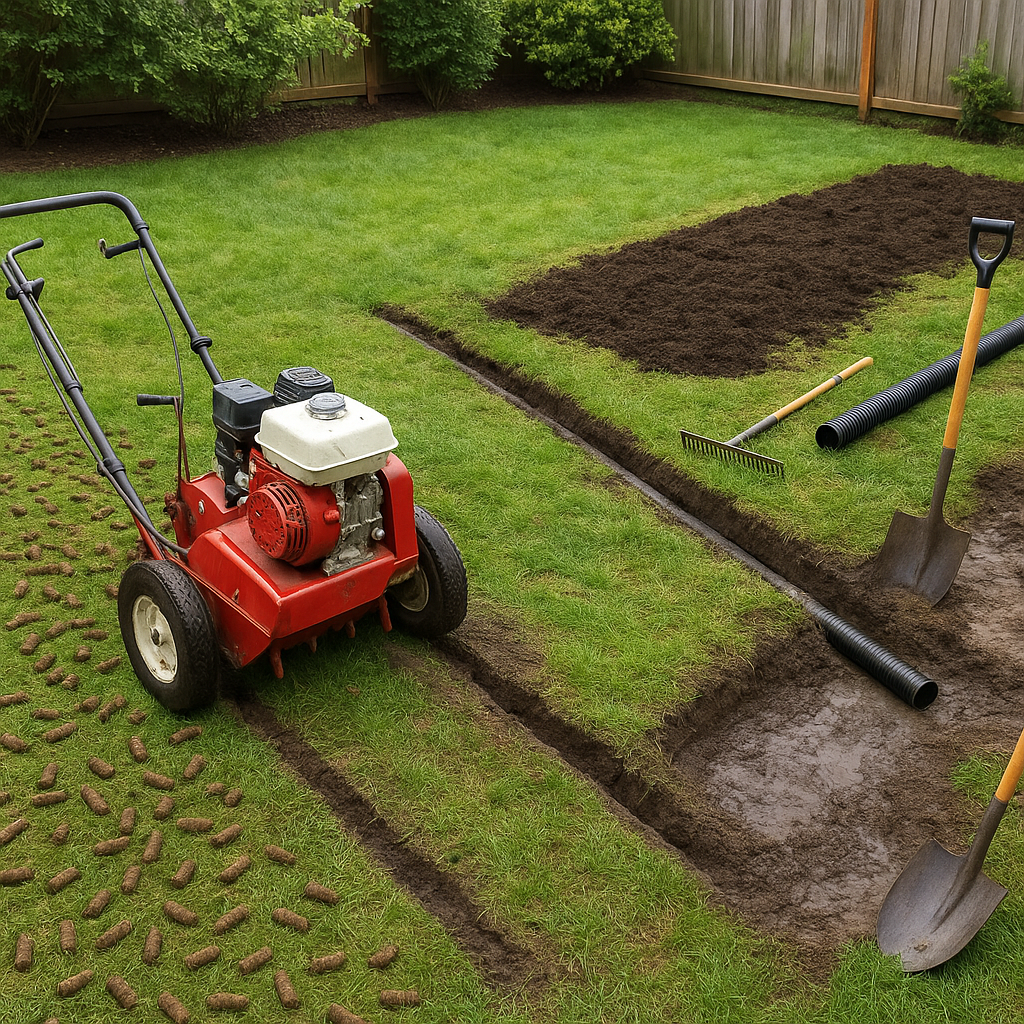
This is crucial for BC lawns. Without proper drainage, you’ll face the same problems next winter.
BC lawns often develop thick thatch layers and moss problems. Use a dethatching rake or rent a power dethatcher to remove:
Timing: Early April is ideal in most BC regions when soil isn’t waterlogged.
BC soils tend to be acidic, which moss loves but grass hates. Test your soil pH – most grasses prefer 6.0-7.0.
Common BC soil issues:
Not all grass types thrive in our wet climate. Best options for BC lawns:
Perennial Ryegrass: Handles moisture well, establishes quickly
Fine Fescue: Drought and shade tolerant, less water-dependent
Pacific Northwest Seed Mixes: Specifically designed for our climate
Avoid: Kentucky Bluegrass (too water-sensitive for BC)
Best timing: Late April to early June in most BC locations
Overseeding technique:
Dead lawn areas: Remove all dead material, loosen soil 2-3 inches deep, then seed as above.
BC lawns need specific nutrition after wet winters:
Early Spring (April): High-nitrogen fertilizer to kickstart growth
Late Spring (May-June): Balanced fertilizer with potassium for root strength
Summer: Light feeding to maintain color without encouraging excessive growth
Cause: Usually nitrogen deficiency from winter leaching
Solution: Apply high-nitrogen fertilizer and ensure proper drainage
Cause: Acidic soil, poor drainage, shade
Solution: Apply iron sulfate, improve drainage, overseed with shade-tolerant grass
Cause: Soil compaction or poor soil quality
Solution: Core aerate, add compost, reseed with appropriate grass type
Cause: Poor drainage, clay soil
Solution: Install drainage, add coarse sand, consider rain gardens
Fall Preparation:
Winter Maintenance:
March: Assess damage, plan improvements
April: Dethatch, aerate, soil amendments
May: Seed/overseed, fertilize
June-August: Maintain consistent watering, light feeding
September: Fall preparation begins
Expect 6-12 weeks for significant improvement, with full recovery by late summer if you follow this timeline consistently.
Some situations require expert help:
Don’t let another BC winter destroy your hard work! Whether you need professional lawn care services, drainage solutions, or expert advice tailored to your specific property, BCServiceFinder.ca connects you with trusted local lawn care professionals who understand BC’s unique climate challenges.
Visit BCServiceFinder.ca today to get matched with experienced landscapers and lawn care experts in your area. From Surrey to Vancouver, Burnaby to Richmond – we’ll help you find the right professional to bring your lawn back to life!
Find Local Lawn Care Experts →
Q: How long does it take to revive a dead lawn in BC?
A: Most BC lawns show significant improvement within 6-8 weeks of proper treatment. Complete recovery typically takes one full growing season (spring through fall). The key is starting early in the season and maintaining consistent care.
Q: Can I revive my lawn without professional help?
A: Absolutely! Most winter-damaged BC lawns can be successfully restored with DIY methods. However, extensive moss problems, drainage issues, or lawns with 70%+ damage may benefit from professional assessment and treatment.
Q: What’s the best grass seed for BC’s wet climate?
A: Perennial ryegrass and fine fescue perform best in BC’s wet conditions. Look for Pacific Northwest seed mixes specifically designed for our climate. Avoid Kentucky Bluegrass, which struggles with our wet winters and dry summers.
Q: Should I replace my entire lawn or try to revive it?
A: If 60% or more of your grass is still alive (even if dormant or yellowing), revival is usually more cost-effective than replacement. Complete replacement is only necessary when dealing with severe soil contamination, extensive moss coverage, or poorly chosen grass varieties.
Q: How do I prevent moss from taking over my lawn again?
A: Improve drainage through aeration and soil amendments, maintain proper soil pH (6.0-7.0), reduce shade where possible, and keep grass thick and healthy through proper fertilization. Moss thrives in acidic, poorly-drained, compacted soil – address these conditions for long-term prevention.
Found this guide helpful? 📲 Please share it on Facebook so your friends and neighbors can make better decisions about their lawn care too! Together, we can help everyone in BC achieve beautiful, healthy lawns that survive our challenging winters.

