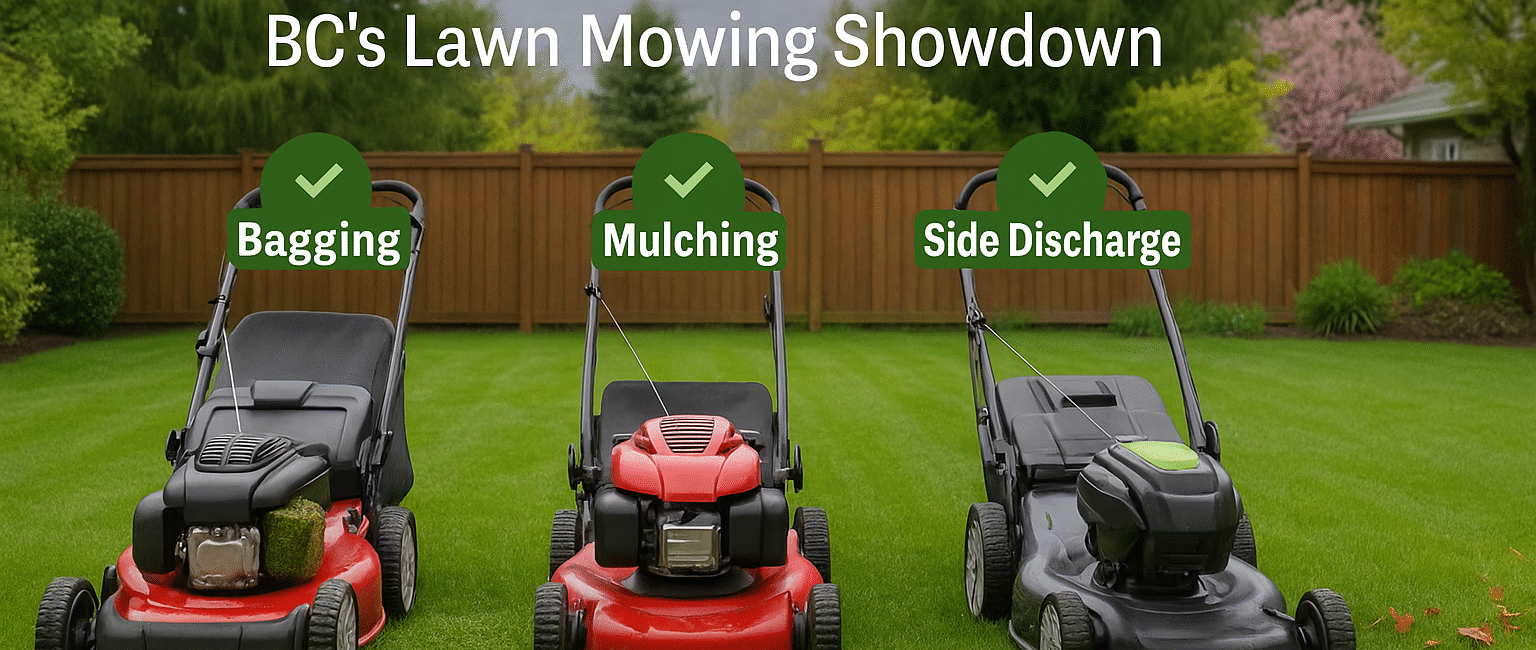
Choosing the right lawn mower cutting method can make or break your lawn care routine. Whether you’re maintaining a compact Surrey townhouse yard or sprawling Cloverdale property, understanding bagging vs mulching vs side discharge options will help you achieve that perfect British Columbia lawn your neighbors will envy.
Let’s break down each lawn mower discharge option so you can make the smartest choice for your specific yard needs and lifestyle.
🎒 Bagging: The Clean-Up Champion
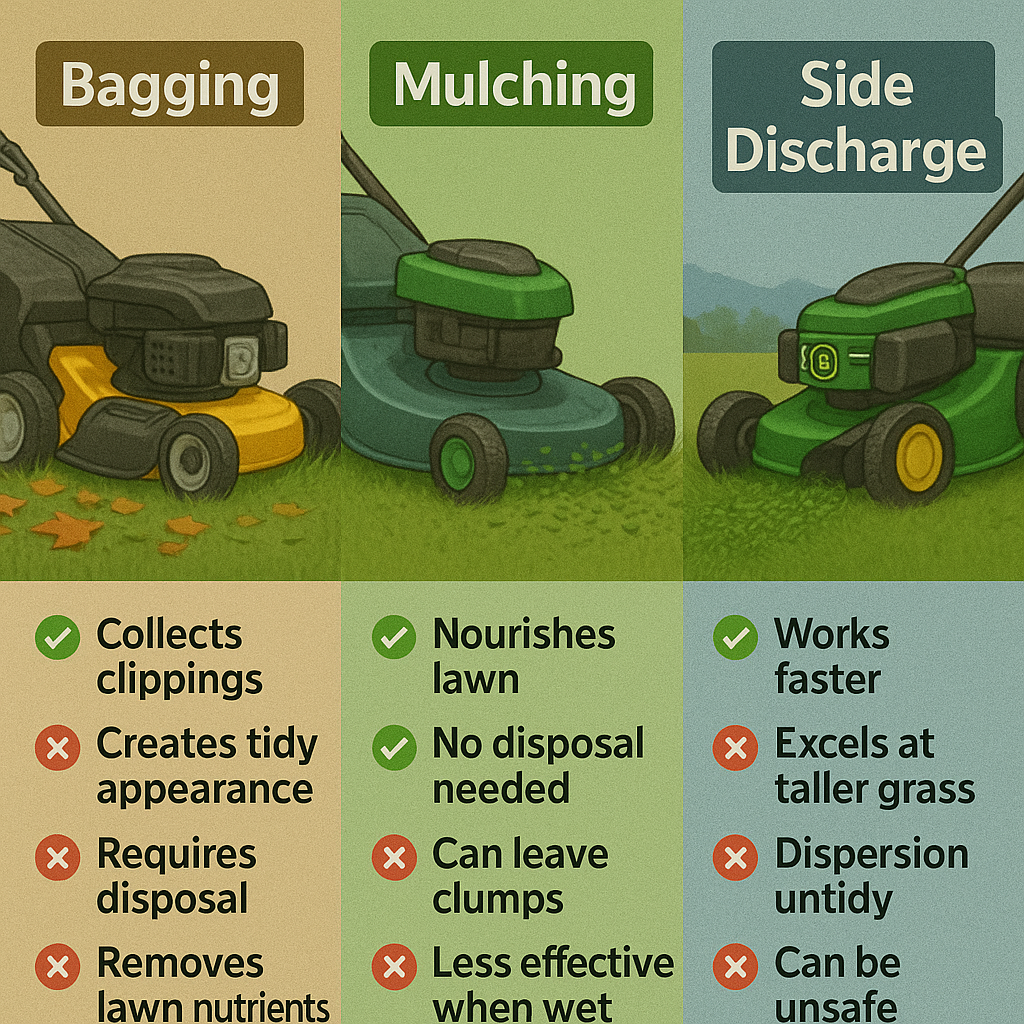
Bagging collects grass clippings in an attached bag or container, leaving your lawn looking pristine and magazine-ready.
Pros of Bagging:
Instant clean look – Perfect for front yards in Surrey’s established neighborhoods
Weed seed control – Prevents dandelions and other weeds from spreading
Ideal for wet conditions – Works well during BC’s rainy seasons when clippings clump
Composting gold – Collected clippings make excellent compost material
Disease prevention – Removes potentially infected grass from your lawn
Cons of Bagging:
Extra work required – Frequent emptying and disposal needed
Higher maintenance costs – Bags need replacing, more fuel/battery usage
Nutrient loss – Removes natural fertilizer that clippings provide
Time-consuming – Stops to empty bags interrupt mowing flow
Storage needs – Requires space for collected clippings
Best for: Homeowners who prioritize appearance, have smaller yards, or deal with persistent weed issues in areas like White Rock or South Surrey.
🌿 Mulching: The Natural Fertilizer
Mulching mowers cut grass into tiny pieces and redistribute them back onto the lawn, where they decompose quickly and feed your grass.
Pros of Mulching:
Free fertilization – Clippings provide natural nutrients worth $50+ annually
Time-saving – No stopping to empty bags or rake
Eco-friendly – Reduces yard waste and landfill burden
Moisture retention – Helps soil stay hydrated during dry Fraser Valley summers
Soil improvement – Adds organic matter that improves soil health
Cons of Mulching:
Weather dependent – Struggles with wet grass typical in BC springs
Requires frequent cutting – Works best when removing only 1/3 of grass height
Can look messy initially – Visible clippings until they decompose
Thatch buildup risk – Potential issues if overused on certain grass types
Equipment specific – Requires proper mulching blade and deck design
Best for: Environmentally conscious homeowners in Richmond, Burnaby, or Delta who mow regularly and want to reduce lawn care costs.
↗️ Side Discharge: The Efficient Performer
Side discharge shoots clippings out the side of the mower, spreading them across the lawn without collection.
Pros of Side Discharge:
Fastest cutting method – No bag emptying or special equipment needed
Handles all conditions – Works well with tall, wet, or thick grass
Most powerful – Unrestricted airflow provides maximum cutting performance
Versatile – Standard feature on most mowers, works with any grass type
Low maintenance – Minimal upkeep required
Cons of Side Discharge:
Uneven distribution – Can create windrows or clumped areas
Appearance issues – Visible clippings may look untidy initially
Neighbor considerations – Clippings may blow onto sidewalks or adjacent properties
Cleanup needed – May require raking in high-visibility areas
Weed seed spreading – Can distribute weed seeds across lawn
Best for: Large property owners in Langley, Abbotsford, or rural BC areas who prioritize speed and efficiency over pristine appearance.
📊 Quick Comparison Table
Feature
Bagging
Mulching
Side Discharge
Appearance
Excellent
Good
Fair
Time Required
High
Low
Lowest
Cost
High
Low
Lowest
Lawn Health
Fair
Excellent
Good
Weather Flexibility
Good
Poor
Excellent
Maintenance
High
Medium
Low
Best Yard Size
Small-Medium
Small-Medium
Large
🏡 Local Considerations for BC Homeowners
Climate Factors:
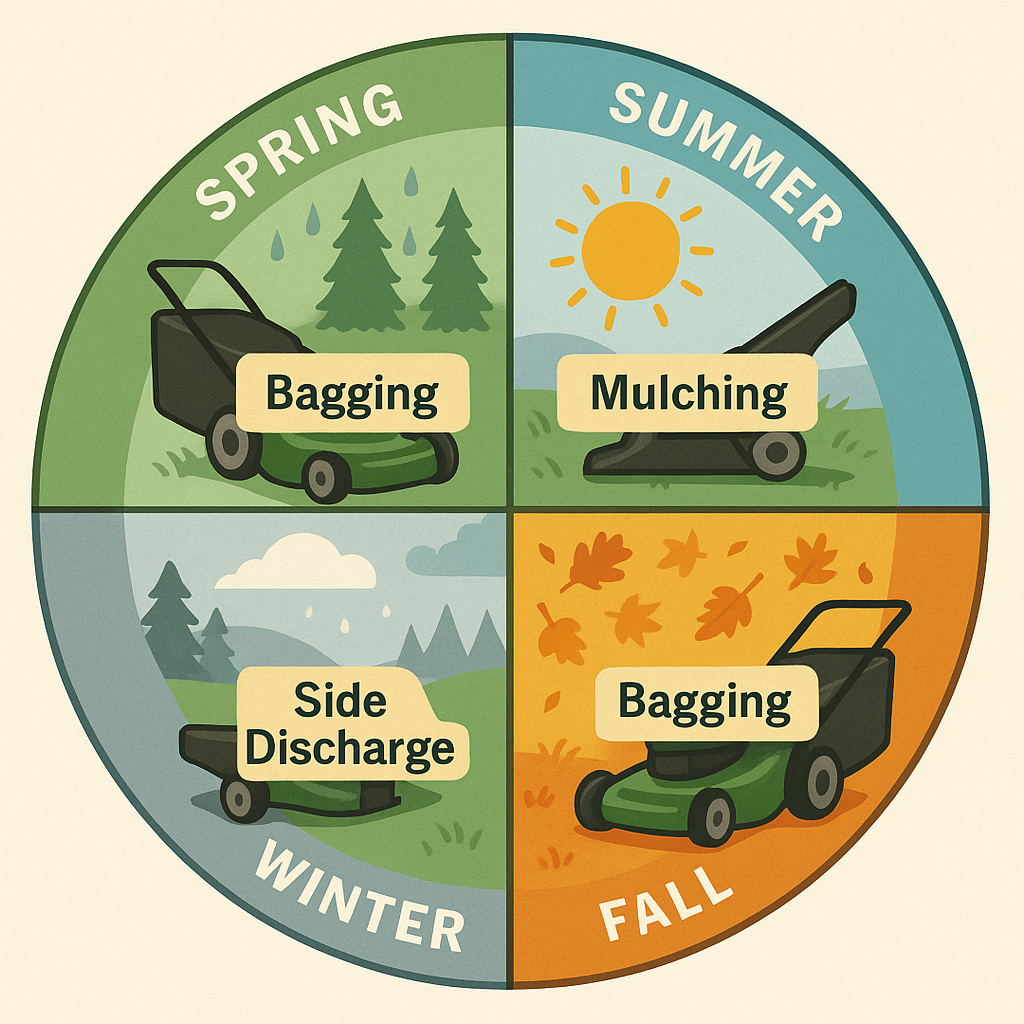
Wet spring seasons make bagging most reliable when grass is soggy
Dry summers benefit from mulching’s moisture-retention properties
Fall leaf season may require bagging to manage mixed debris
Grass Types:
Fescue lawns (common in Surrey) work well with all three methods
Pacific Northwest seed mixes respond excellently to mulching
High-traffic areas may benefit from bagging to reduce wear
Municipal Considerations:
Many BC municipalities offer yard waste pickup supporting bagging
Composting programs in Vancouver and surrounding areas welcome grass clippings
Water restrictions make mulching’s moisture retention valuable
💡 Pro Tips for Each Method
Maximizing Bagging Results:
Empty bags when 2/3 full for optimal performance
Choose mowers with larger bag capacity for efficiency
Consider bags with easy-dump features
Perfecting Mulching Technique:
Never cut more than 1/3 of grass height
Keep mulching blades sharp for finest clippings
Avoid mulching during wet conditions
Optimizing Side Discharge:
Overlap passes slightly for even distribution
Rake heavy clumps if they don’t disperse naturally
Point discharge away from walkways and flower beds
🤔 Which Method Should You Choose?
Choose Bagging if you:
Have a small to medium yard (under 5,000 sq ft)
Live in a neighborhood with strict appearance standards
Deal with significant weed problems
Don’t mind extra time and effort for pristine results
Choose Mulching if you:
Want to save money on fertilizer
Mow regularly (weekly during growing season)
Prioritize environmental sustainability
Have time for proper mulching technique
Choose Side Discharge if you:
Have a large property (over 10,000 sq ft)
Value speed and efficiency above all
Deal with varying grass conditions
Want the simplest maintenance routine
📞 Call to Action
Want a no-fuss mower recommendation based on your yard size and lifestyle? Head to BCServiceFinder.ca to get matched with local experts and service options.
❓ Frequently Asked Questions
Can I switch between bagging and mulching on the same mower?
Many modern mowers offer convertible options, allowing you to switch methods based on conditions. Look for mowers with removable bags and mulching plug inserts.
How often should I empty the bag when bagging?
Empty when the bag is about 2/3 full for optimal airflow and cutting performance. In thick grass, this might be every 10-15 minutes.
Does mulching really provide enough nutrients for my lawn?
Yes! Grass clippings can provide up to 25% of your lawn’s nitrogen needs, equivalent to one fertilizer application per year worth $50-100.
What’s the best discharge method for BC’s wet spring weather?
Bagging works best in wet conditions since clippings won’t clump and mat down. Side discharge is second-best, while mulching should be avoided when grass is wet.
How do I prevent mulching from creating thatch buildup?
Mow frequently (never removing more than 1/3 of grass height), keep blades sharp, and avoid mulching during wet conditions. Consider dethatching annually if you mulch exclusively.
Found this helpful? 👍 Share this guide with your friends on Facebook so they can make better decisions when buying their next lawn mower! Your neighbors will thank you for helping them achieve the perfect lawn too.